
Design brief
12 million people experience intimate partner violence each year and often have a limited window of time to take action.
Problem
How can we help abuse survivors prepare for potential legal action while reducing their sense of helplessness?
Solution
A secure and discreet documentation tool that safely records and organizes evidence of violence and abuse.
Secondary research
Fear stops survivors from reporting
Perpetrators often destroy devices, erase messages, or restrict access to technology.
Key barriers
Fear of retaliation and escalation
Privacy and confidentiality
Insufficient resources and support
User insights
"My abuser was never held accountable."
"I was denied a restraining order for not remembering the exact time of the assault."
User journey map
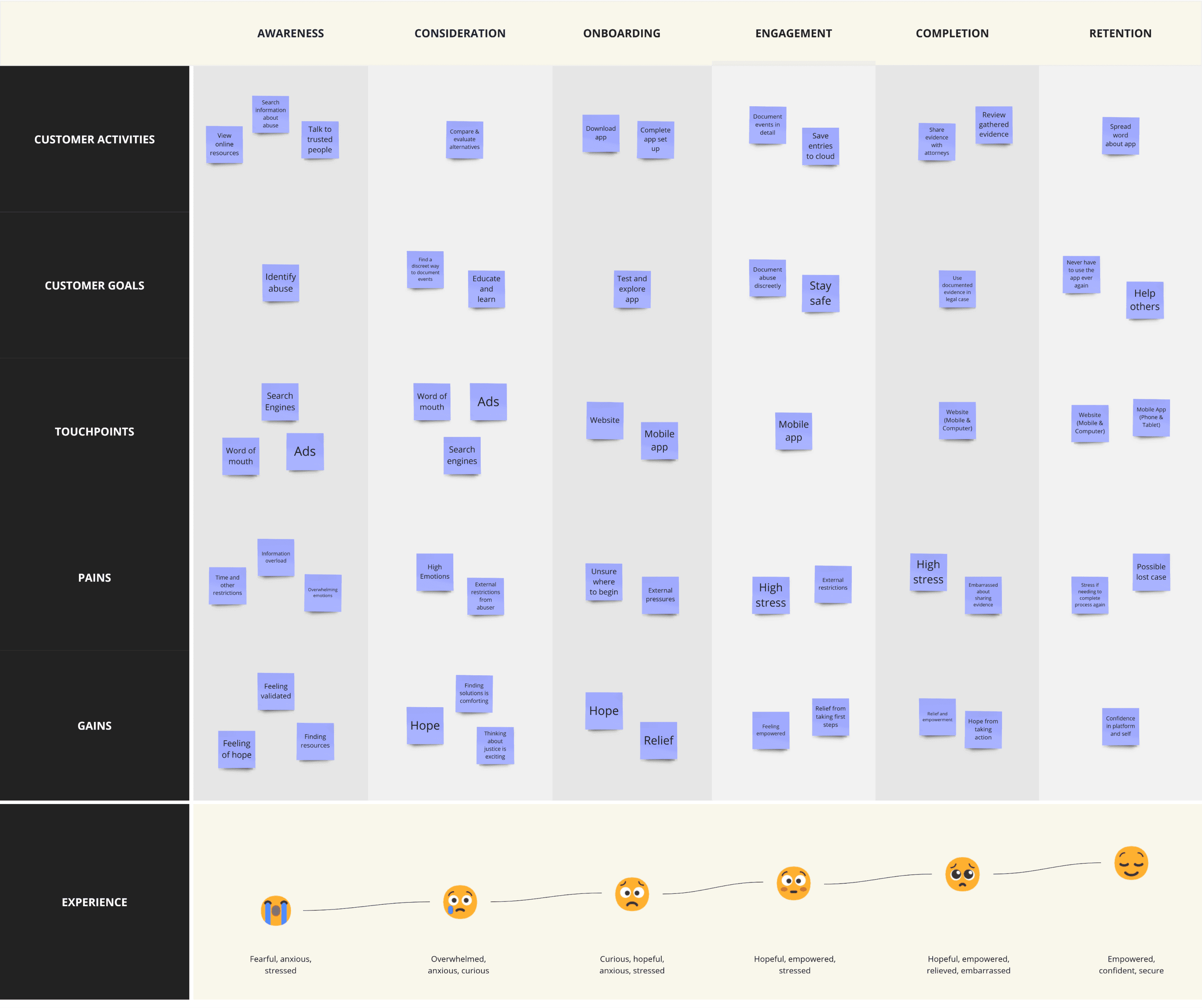
Transforming user fear into hope
We want to turn users' experiences from fear and helplessness to empowerment and action as they prepare to leave their abuser and build a legal case against them.
User vs business goals
Helping survivors look forward to the future
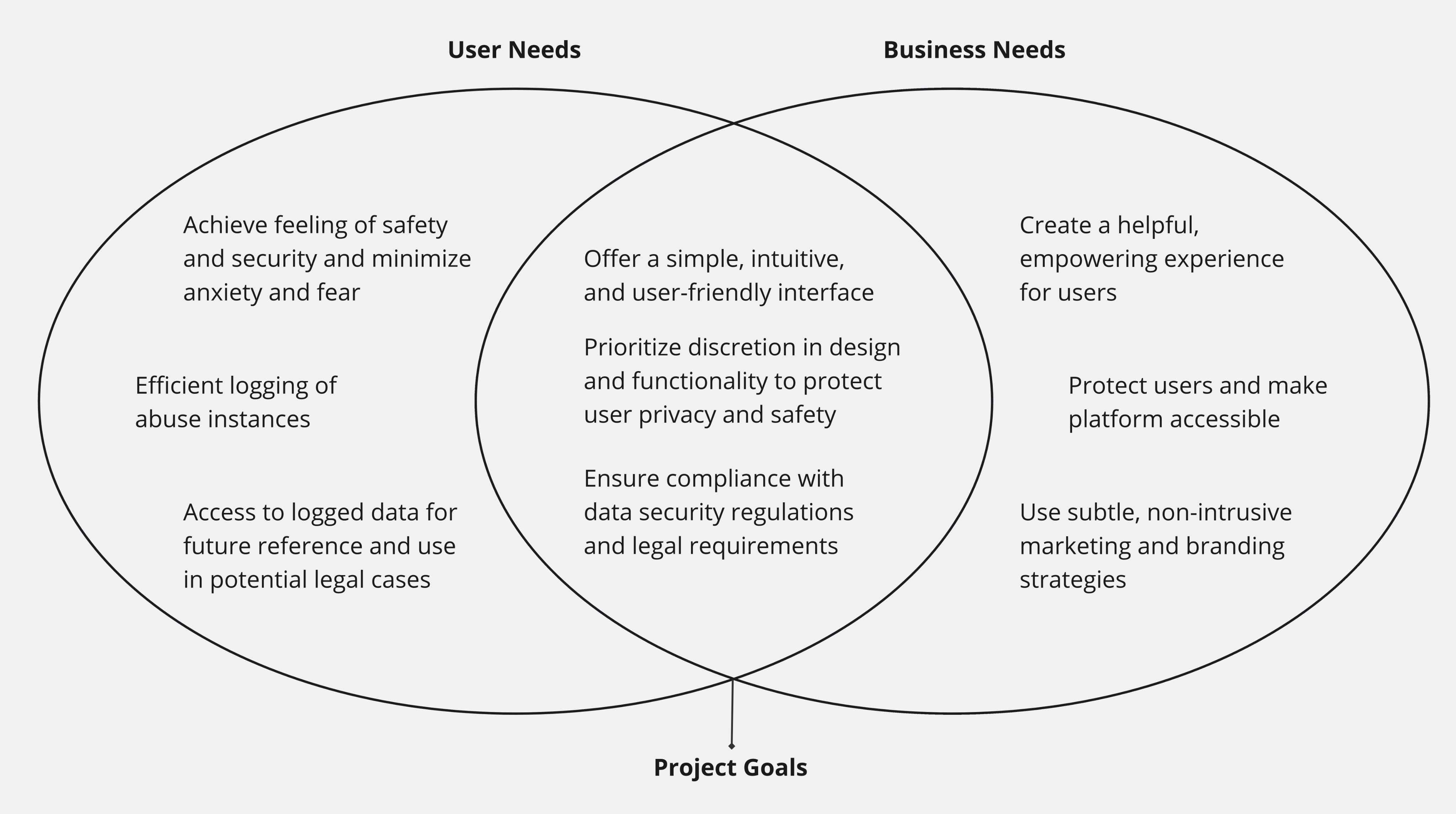
Our main project goal is to minimize risk for survivors by keeping them safe while they document instances of abuse.
Project goals
Create a user experience that empowers action
Discretion in design and functionality
Simple and intuitive interface
How can we achieve these goals?
Simple, intuitive interface with quick-fill forms
Neutral branding and language
Encrypted data, safe exit, and legal compliance
User and task flows
Reducing user stress and cognitive load
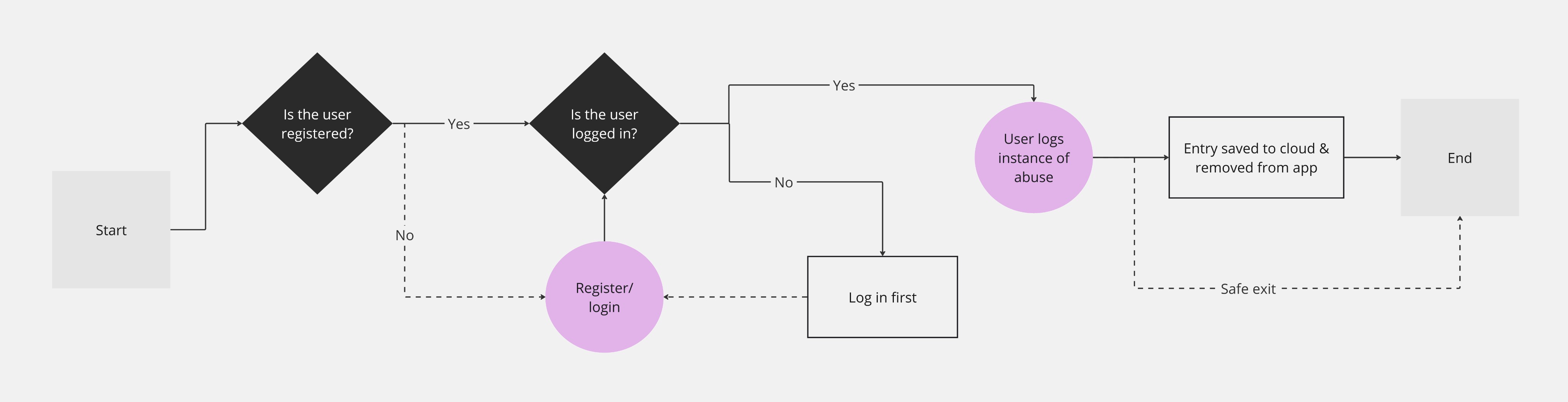
Users fear being caught by their abuser, so I prioritized safety features like automatic cloud saving, app data deletion, and safe exit. If the app is closed or Safe Exit is used, the entry is saved to the cloud and removed from the device.
Paper wireframe
Discretion through a functional wellness app
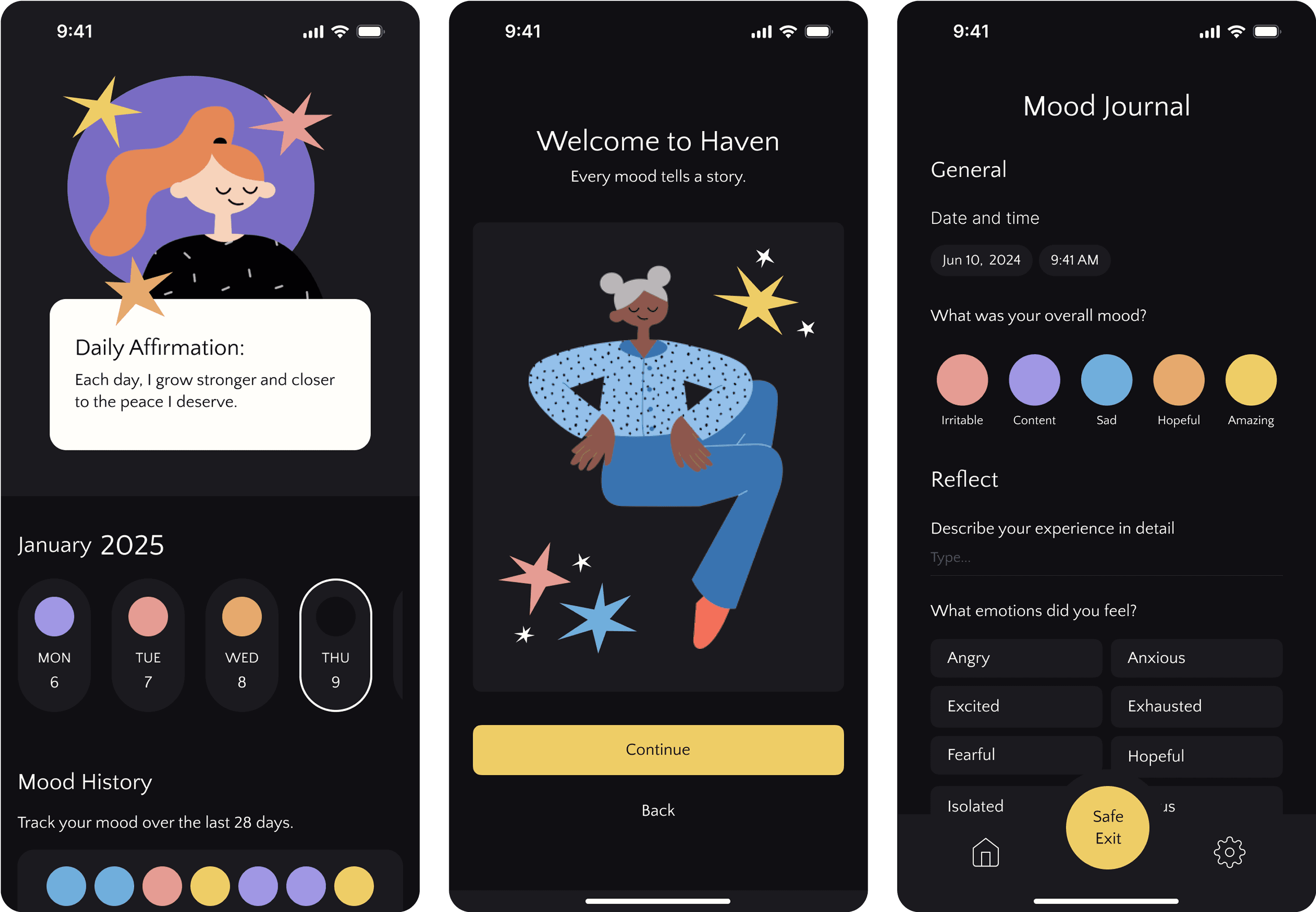
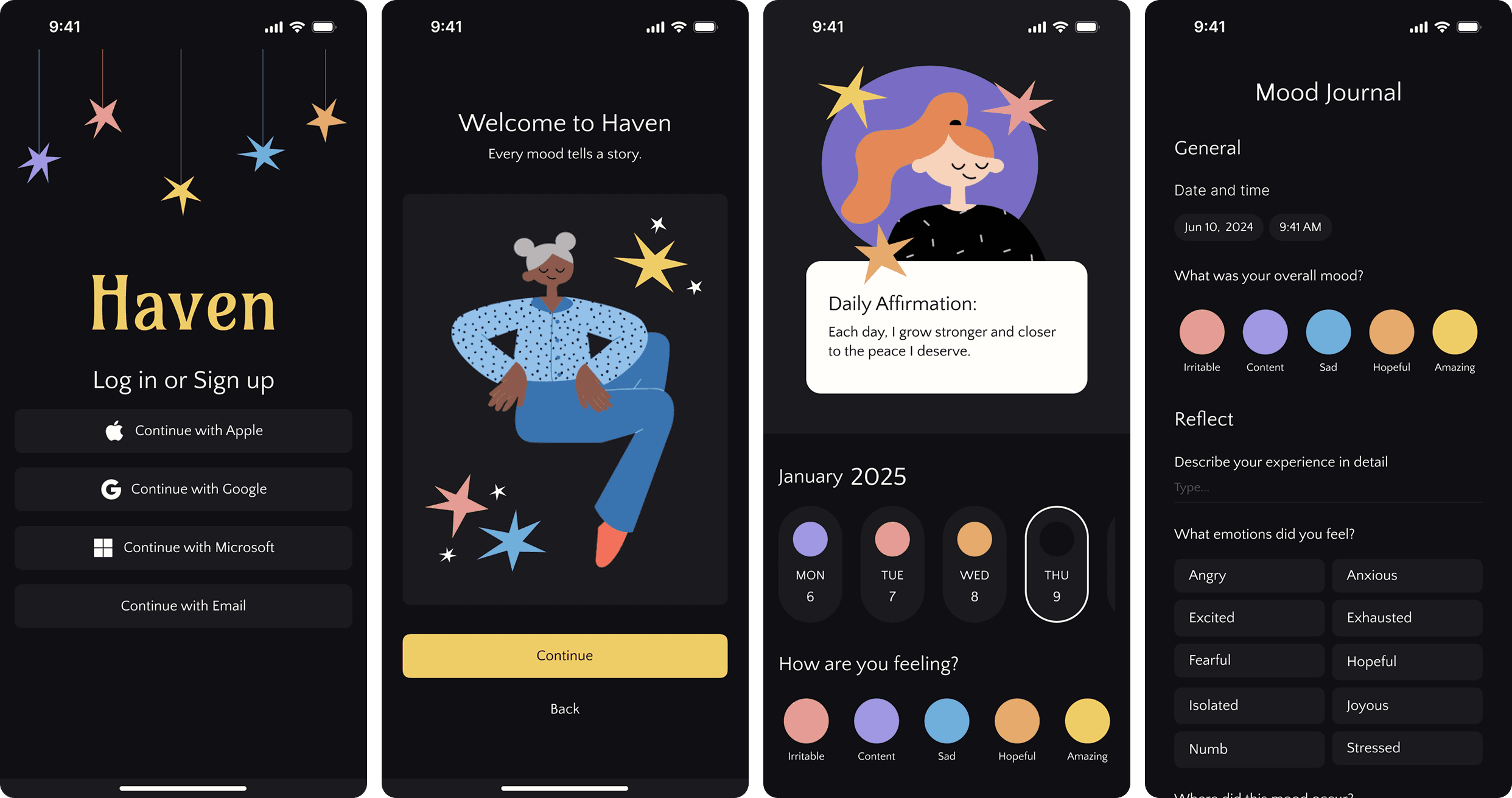
Haven appears as a digital mental health journal where users track their mood and well-being. Behind this interface, prompts subtly guide users to document crucial evidence.
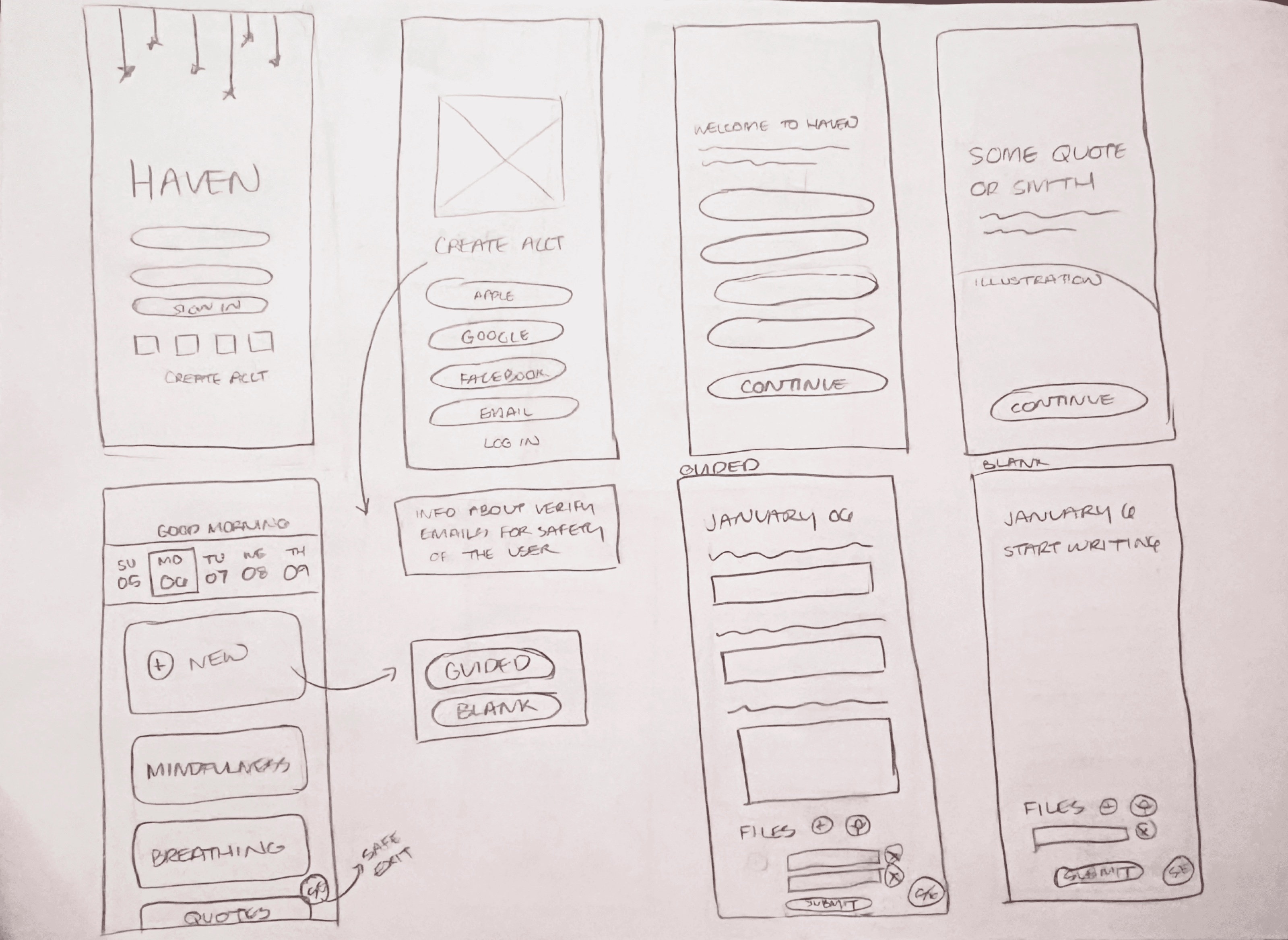
Low-fidelity wireframes
Guided prompts or blank journal
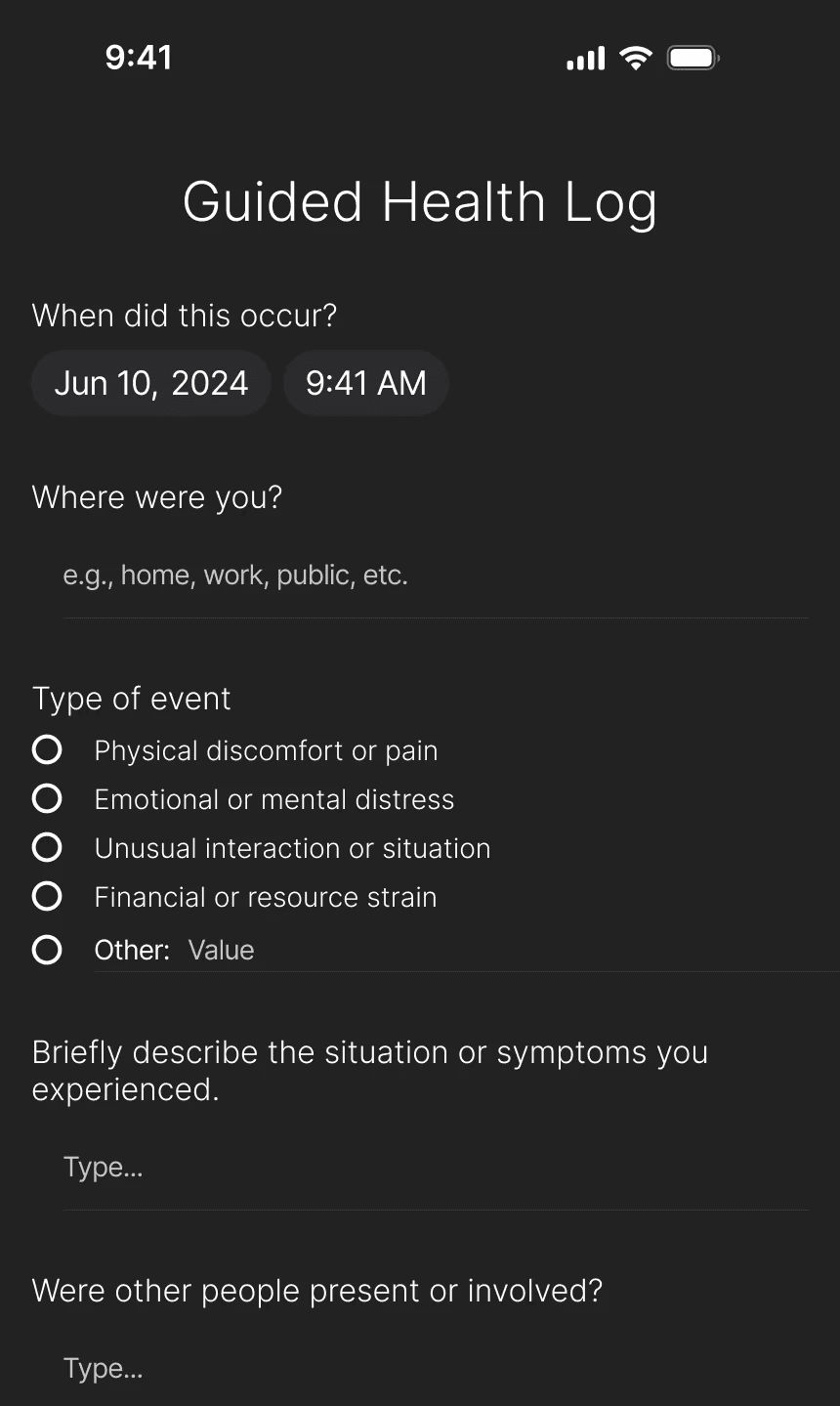
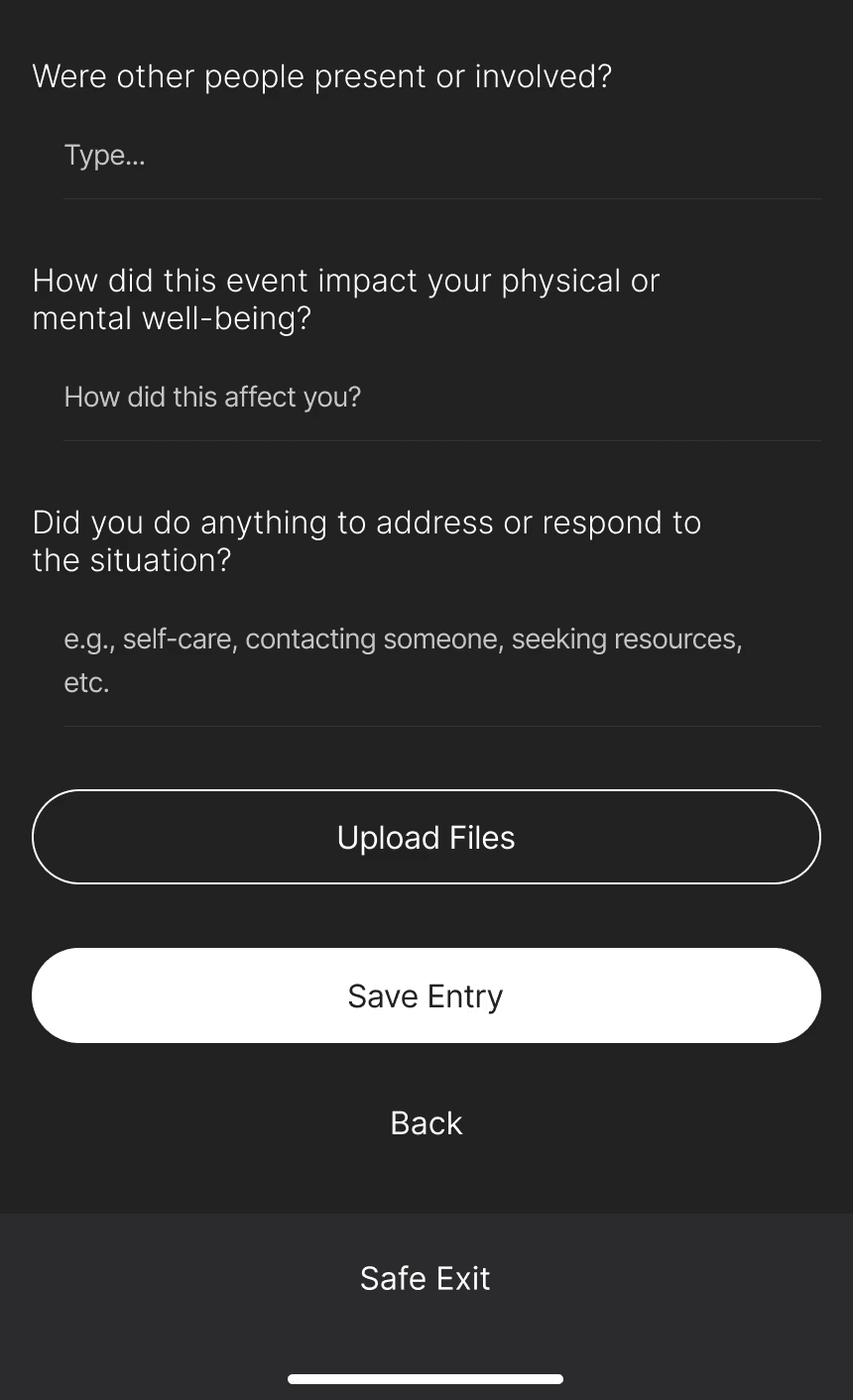
Users can document events with two options: a guided format to reduce cognitive load and a blank version for recording information quickly.
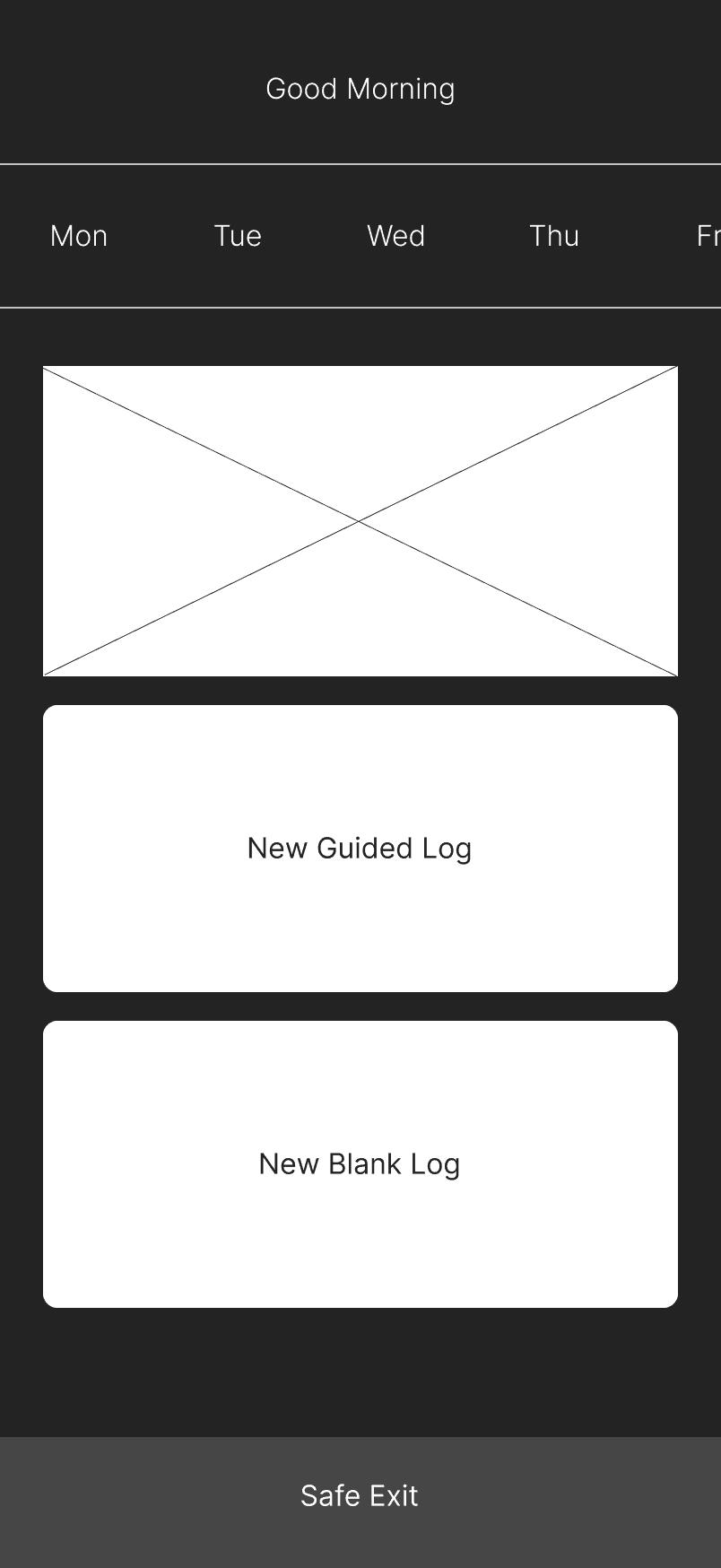
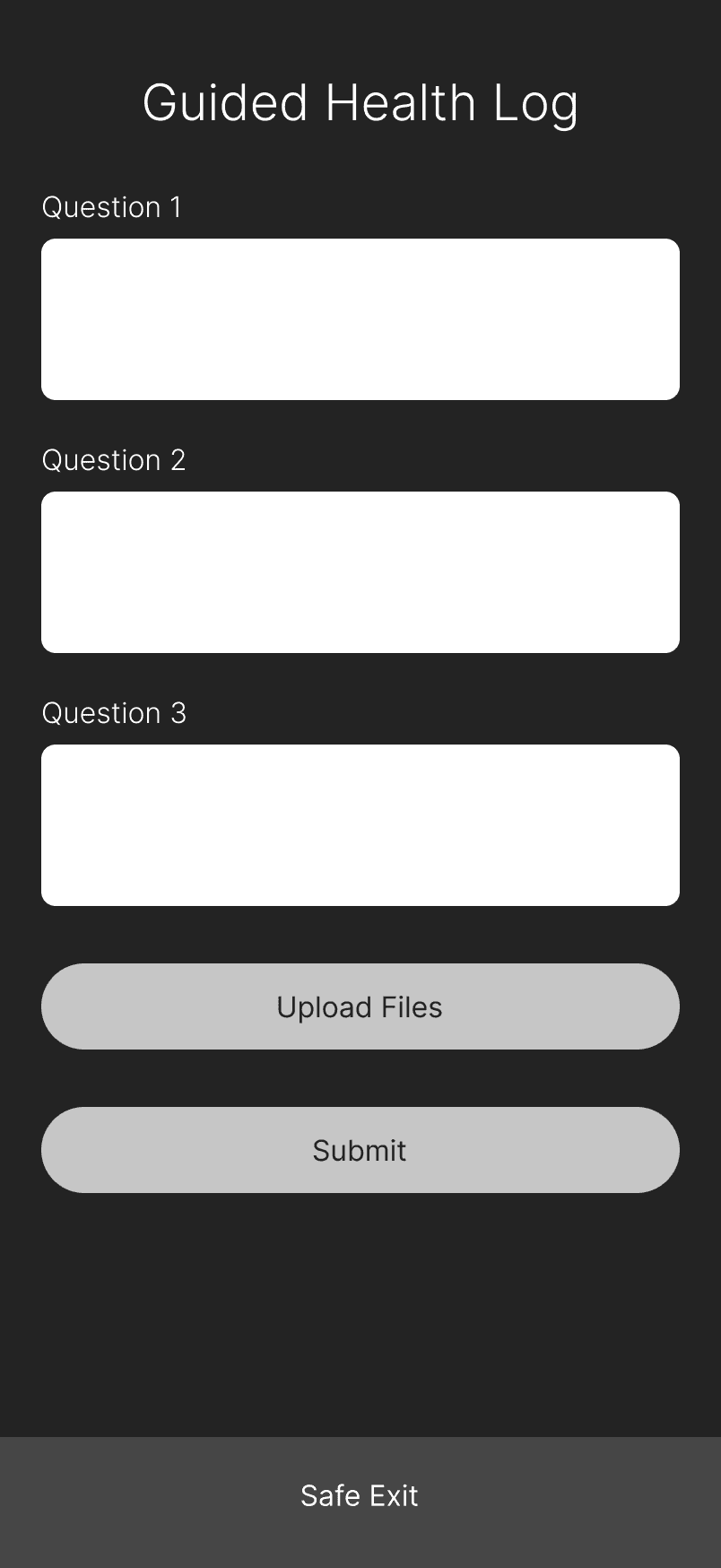
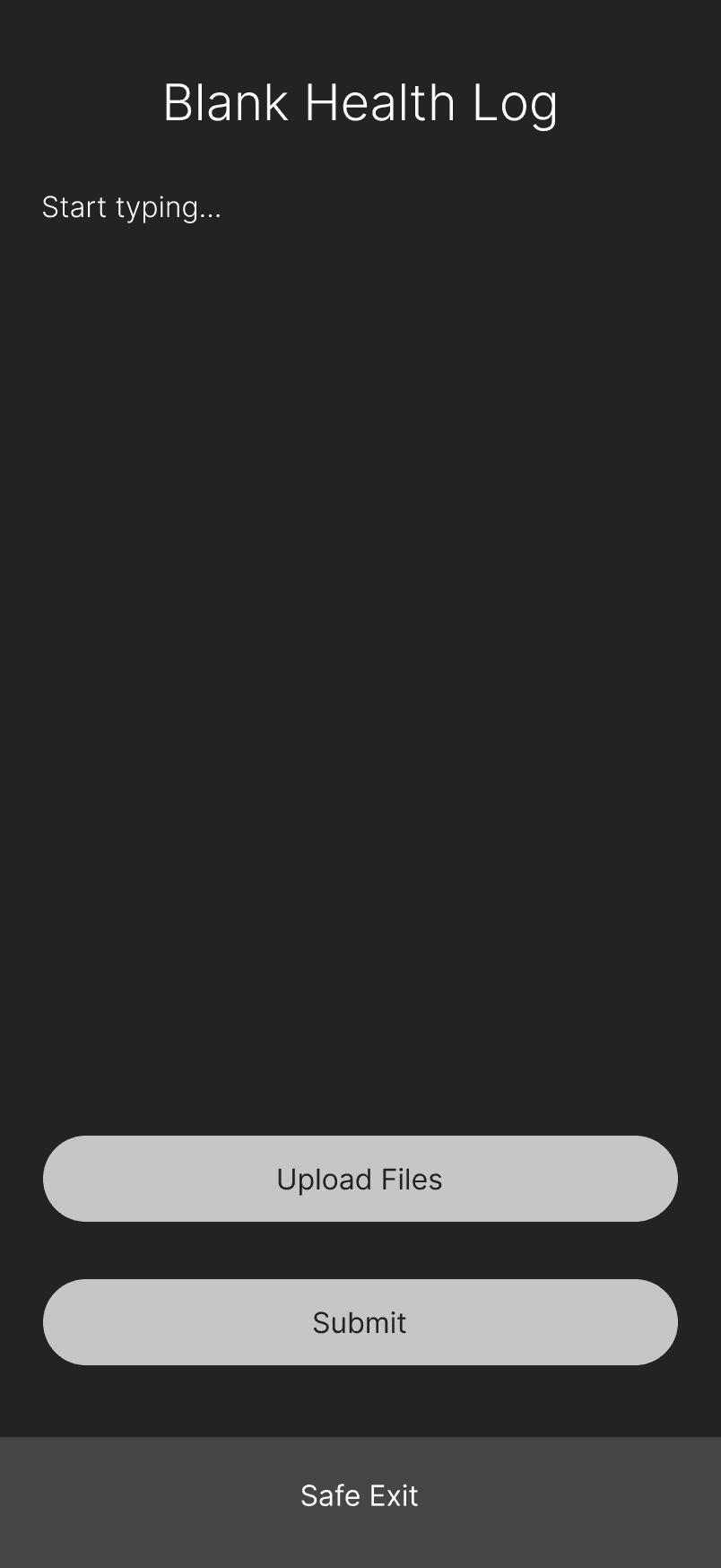
Medium-fidelity wireframes
Guided health log
With structure established, I moved into medium fidelity and writing. Every prompt had to feel like a genuine mental health journal while still capturing the evidence survivors need.
Usability testing
Prioritizing speed and accuracy
I conducted 3 rounds of in-person usability testing, focusing on task duration and error rate.
Remove unnecessary steps
To reduce decision-making mental load, I combined both options into a single, unified log.
The decoy interface is not convincing
The wording stood out as unnatural, risking detection by an abusive partner.
Iteration
Carefully curated prompts
I updated the wording to be even more subtle to lower the risk of compromised safety, while still prompting for important information.
Original questions
Updated questions
Briefly describe the situation or symptoms you experienced.
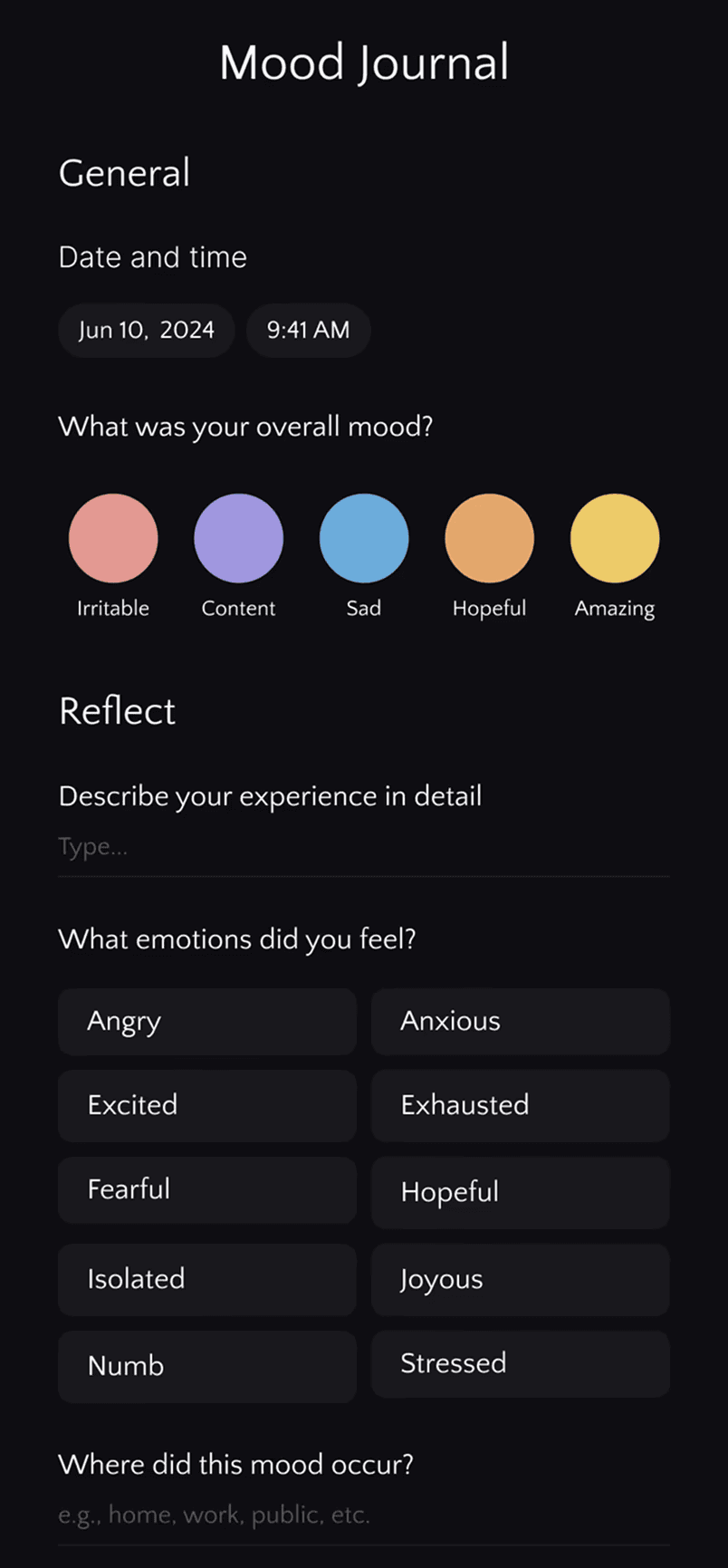
Describe your experience in detail. What emotions did you feel?
How did this event impact your physical or mental well-being?
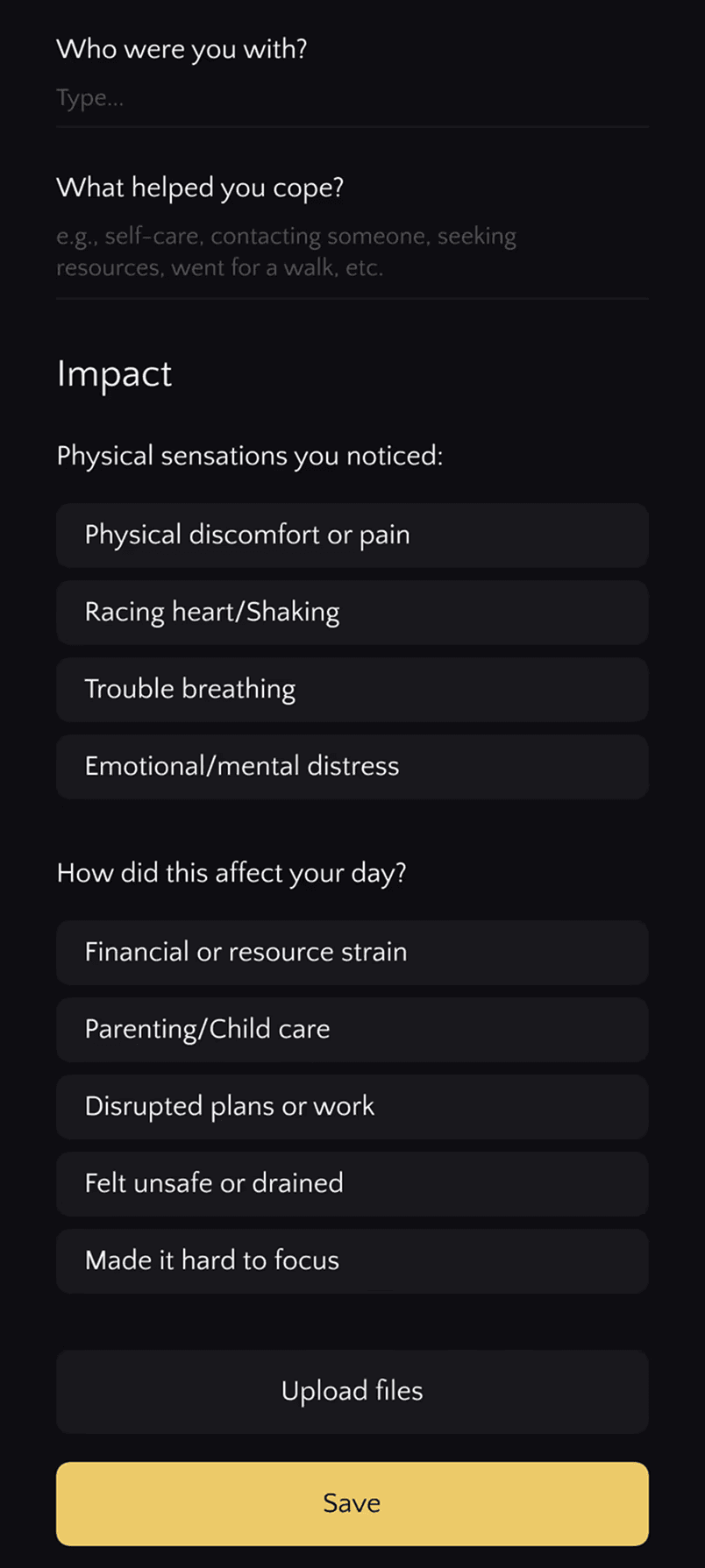
Select physical sensations you noticed & how it affected your day.
Did you do anything to address or respond to the situation?
What helped you cope? e.g. self-care, seeking resources, etc.
High-fidelity prototype
Updated visual design
I used a mix of input types including color selectors, buttons, and dropdowns to speed up documentation. Typing everything out is slow and cognitively demanding, so tappable inputs let users capture information faster and with less effort.
Final usability testing results
Impact for survivors
My last design updates validated success through one last round of user testing.
All tasks completed within 1 minute or less.
Task completion was 100% with no errors.
"I would feel secure if I needed to use this app for any reason"
Final deliverables
Final designs
The final visual design came together as an app that feels calm and approachable, providing a safe space for survivors to document instances of abuse discreetly.
Static screens
Prototype walkthrough
Final takeaways
In an ideal world…
If this product were to actually launch, I'd make a few changes:
I'd collaborate with other teams
A platform of this nature would require input from legal teams, marketing, and engineers to ensure compliance with a variety of regulations, user protections, and industry standards.
I'd conduct testing with actual survivors in safe environments
Since this was a personal project, my user testing was limited, but leaning into secondary research ensured I still approached the topic with empathy and knowledge. Expanded user testing would benefit the project further.